Guide
How to raise your cleaning prices with clients
In Arbon, open the pricing book to see every recurring property's price today next to what the true cost of an hour says it should be, with no client rising more than 15% in year one. Then open What to say, pick a property, and use the call or written script with that client's real numbers.
Step 1
Open the book
The book lists every recurring property with the crew, the hours, what it is billed now and what it should be billed at your rate per labor hour. Here that rate is $55, and the book is $8,740 a month today against $10,780 at the new rate.
Year one is what each client actually moves to. A rise bigger than 15% is capped and marked, so nobody gets a shock; the capped amount is shown as held back.
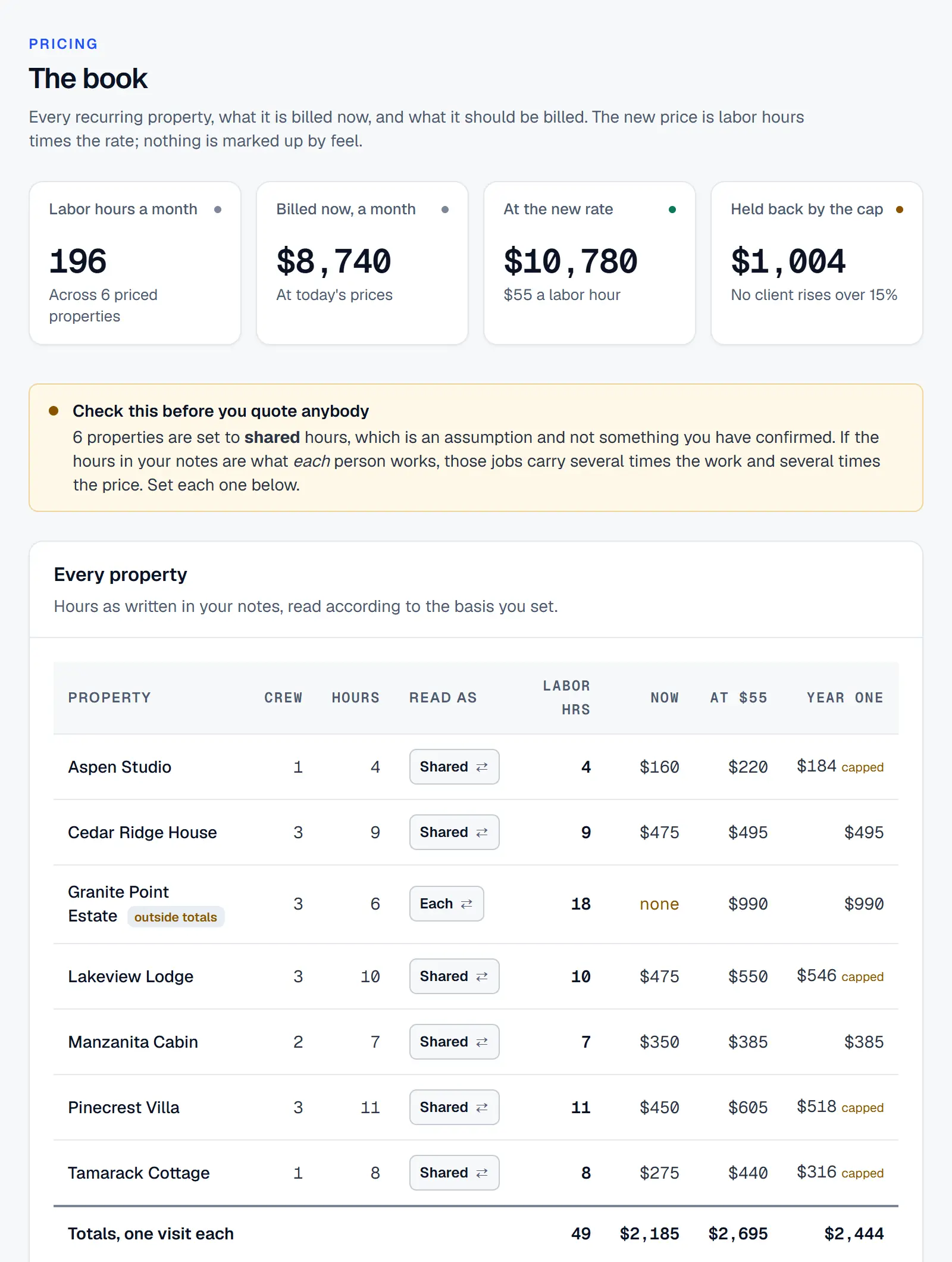
Four of seven properties are capped in year one. Step 2
Settle shared or each before you call anyone
Notes like 6 hours, 2 people can mean six hours between them or six hours each. The Read as button switches between Shared and Each for every property. It is the biggest single lever on the numbers, so check it against what really happens on site before you quote.
Step 3
Pick the script and fill it in
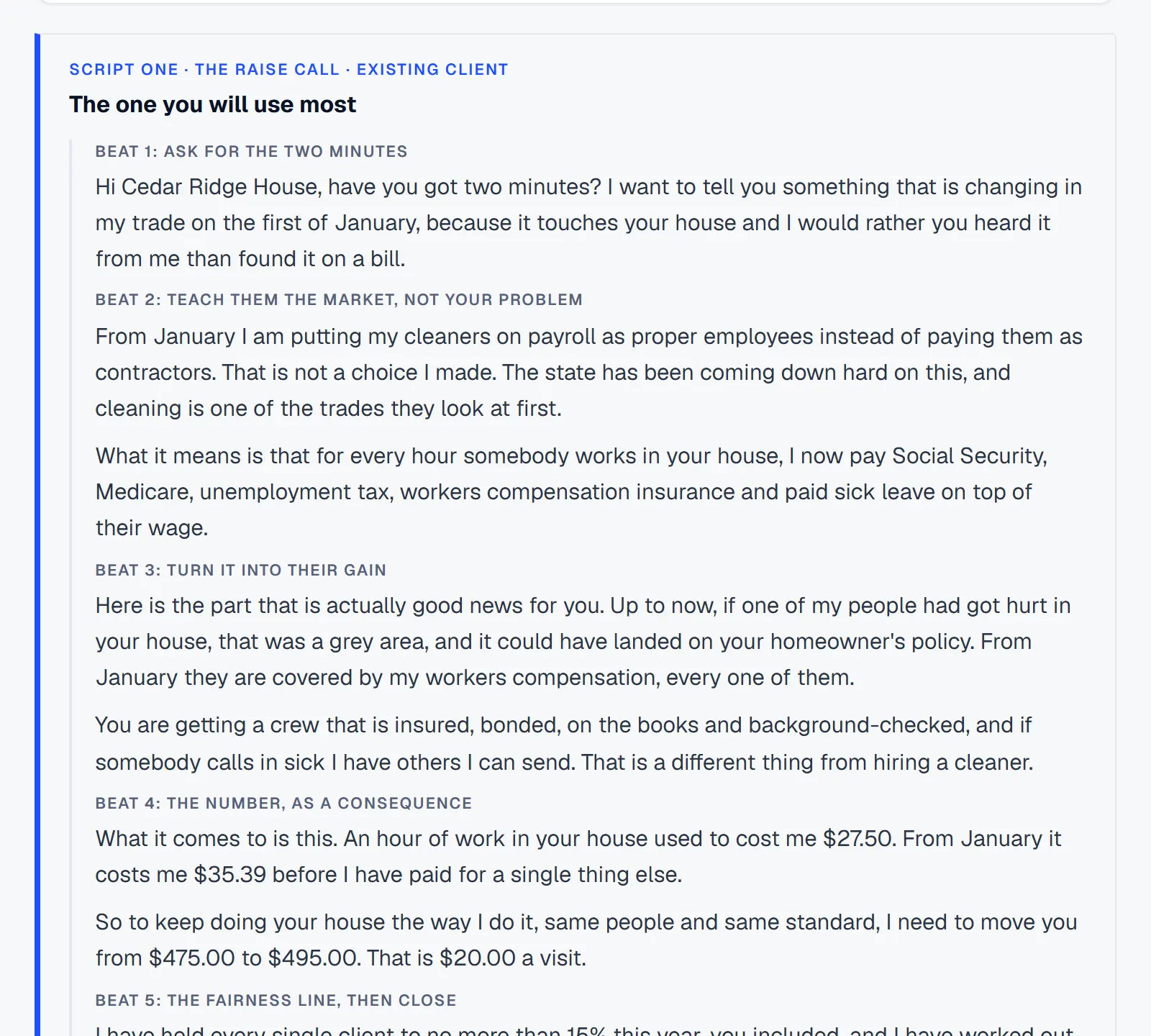
Open What to say and pick a property. Every shaded word becomes that client's figures: their old price, the new one, the difference a visit and the date. There are four scripts: the raise call, a written version for text or email, the four things clients say back, and a script for quoting a large new house.
None of them opens with the price. They explain what changed in the trade first, so the number arrives as a consequence.
Step 4
Send the written version, then call
Send the written script first and ring two days later. The message does the explaining, and the call only has to get the yes. Say the reason once, then ask a question; do not defend the price twice.
When they agree, change the price on their upcoming cleans and leave Every later clean in this series too ticked.
Questions people ask next.
Short answers, with the same limits the guide has already stated.
Where does the $55 come from?
What about a client on a flat monthly contract?
The next step
Try it on one real week.
Put a week of cleans on the calendar, send the crew their shifts and invoice from the visits. 60 days free.
No card. Cancel from settings.